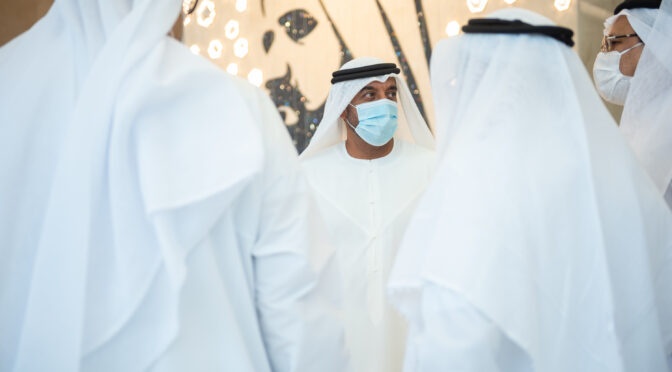
His Highness Sheikh Ahmed bin Saeed Al Maktoum, Chairperson of the Board of Trustees of Al Jalila Foundation, has recognised a number of donors of Al Jalila Foundation, a member of the Mohammed Bin Rashid Al Maktoum Global Initiatives, for their significant contributions to the advancement of medical research in the UAE.
The recognition ceremony was attended by HE AbdulRahman bin Mohammed Al Owais, Minister of Health and Prevention; HE Sara Al Amiri, Minister of State for Advanced Technology; HE Humaid Al Qutami, Director General of Dubai Health Authority; and members of the Al Jalila Foundation Board of Trustees, Board of Directors and Management Team.
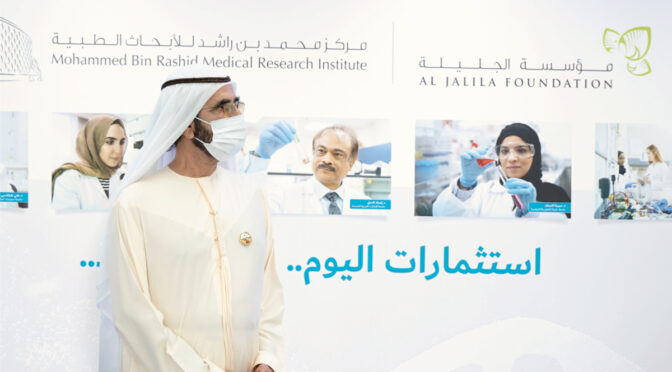
His Highness Sheikh Ahmed, accompanied by the founding donors, visited the Mohammed Bin Rashid Medical Research Institute, the UAE’s first independent multi-disciplinary biomedical research centre, recently inaugurated by His Highness Sheikh Mohammed bin Rashid Al Maktoum, Vice President and Prime Minister of the UAE and Ruler of Dubai, which is housed in the Al Jalila Foundation building, an AED300 million facility, located in Dubai Healthcare City.
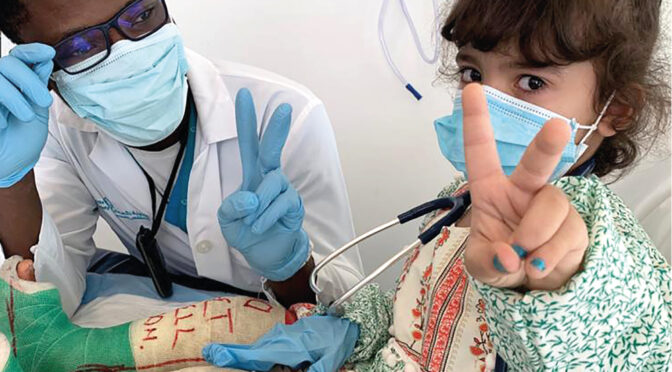
Since inception in 2013, Al Jalila Foundation has provided opportunities to increase innovative, impactful medical research investing AED25 million to award 95 research grants and eight international research fellowships at world-leading institutions in the UK, USA and Japan to discover solutions for the region’s biggest health challenges. Al Jalila Foundation research grant recipients have garnered 18 national and international awards, five medical breakthroughs and five patents. In April 2020, Al Jalila Foundation expanded its research portfolio in response to the novel coronavirus (COVID-19) outbreak with dedicated research grants to address the pandemic and infectious diseases.
In response to the current global health crisis, Al Jalila Foundation is more dedicated than ever to finding the cures of the future through advances in medical research. It has launched a unique giving campaign titled ‘Bassmat Rashid Bin Saeed’, which pays tribute to Sheikh Rashid’s philanthropic legacy and recognises generous donors who invest in medical research. The campaign features a first-of-its-kind donor-recognition wall that gives donors a chance to engrave their name on a tile virtually or live. The wall’s cutting-edge robotics technology makes it possible for donors to make an impact from anywhere at any time.
His Highness Sheikh Ahmed bin Saeed Al Maktoum, Chairperson of the Al Jalila Foundation Board of Trustees, said: “Sheikh Rashid’s visionary leadership and philanthropic spirit brought to reality many of the great advancements that transformed Dubai into the modern city it is today. Bassmat Rashid Bin Saeed pays tribute to the legacy of Sheikh Rashid and creates a path for future pioneers to advance medical breakthroughs that could save millions of lives.”
Her Excellency Dr. Raja Easa Al Gurg, Chairperson of the Board of Directors and Member of the Board of Trustees of Al Jalila Foundation, said: “As a young Foundation with great ambitions, our progress made to date reaffirms our commitment to becoming a global leader in medical research. With the right support from philanthropists, corporates, the academic and research fraternity, and the wider community, we are on the right track to cultivate an inspiring research eco-system to propel the UAE to the forefront of medical innovation.”
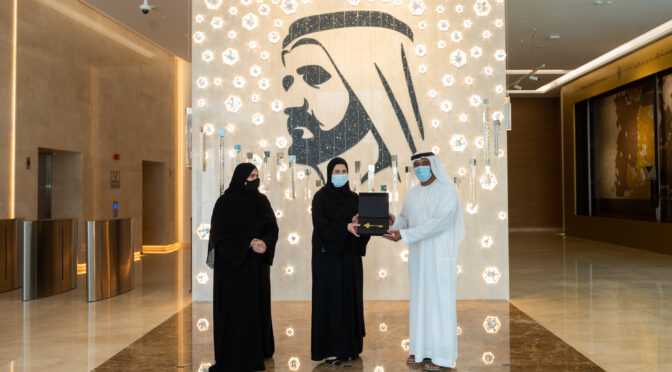
The Crystals of Hope, a magnificent crystal installation featuring HH Sheikh Mohammed’s profile and the names of the 25 founding donors was unveiled as a tribute to His Highness for championing innovation and research.
Dr. Abdulkareem Sultan Al Olama, Chief Executive Officer of Al Jalila Foundation, said: “Research has the power to advance medical breakthroughs to change the fabric of science as we know it and we salute the researchers, scientists and doctors that are shaping the future of medicine. We are immensely grateful to our founding donors that make it possible for Al Jalila Foundation to continue to break the boundaries of research to transform patients’ lives.”
The donors recognised for their generosity and support included Easa Saleh Al Gurg Charity Foundation, Dr. Rajen Kilachand, Raghuvinder Kataria, AW Rostamani Group, Abdul Rahim Mohammed Belghozooz Al Zarooni, Apparel Group, Amity University, Late Abdulla Hassan Al Rostamani, Union Co-operative Society, Emaar Properties, Dubai Electricity & Water Authority, Aster DM Healthcare, Sobha Group, Malabar Gold and Diamonds, Landmark Group, Faizal & Shabana Kottikollon, Sunny Varkey, Emirates Integrated Telecommunications Company (du), Ahmed Seddiqi Family, Azizi Investments, DUTCO Group, The Abdulghaffar Hussain Foundation, Al Ansari Exchange, Dubai Holding, and Khansaheb Civil Engineering.